
Wholesale vs. Retail: When Should Your Apparel Business Start Buying in Bulk?
When you're running a custom apparel business, one of the biggest questions is when to stop buying supplies one piece at a time and start buying in larger quantities.
Buying wholesale can lower your cost per item, but buying more isn't automatically better.
If you're still building your customer base, purchasing too much inventory can tie up money you could use elsewhere in your business.
So how do you know when it's time to start buying in bulk?
Start With Your Current Demand
Before placing a larger order, look at what you're actually selling.
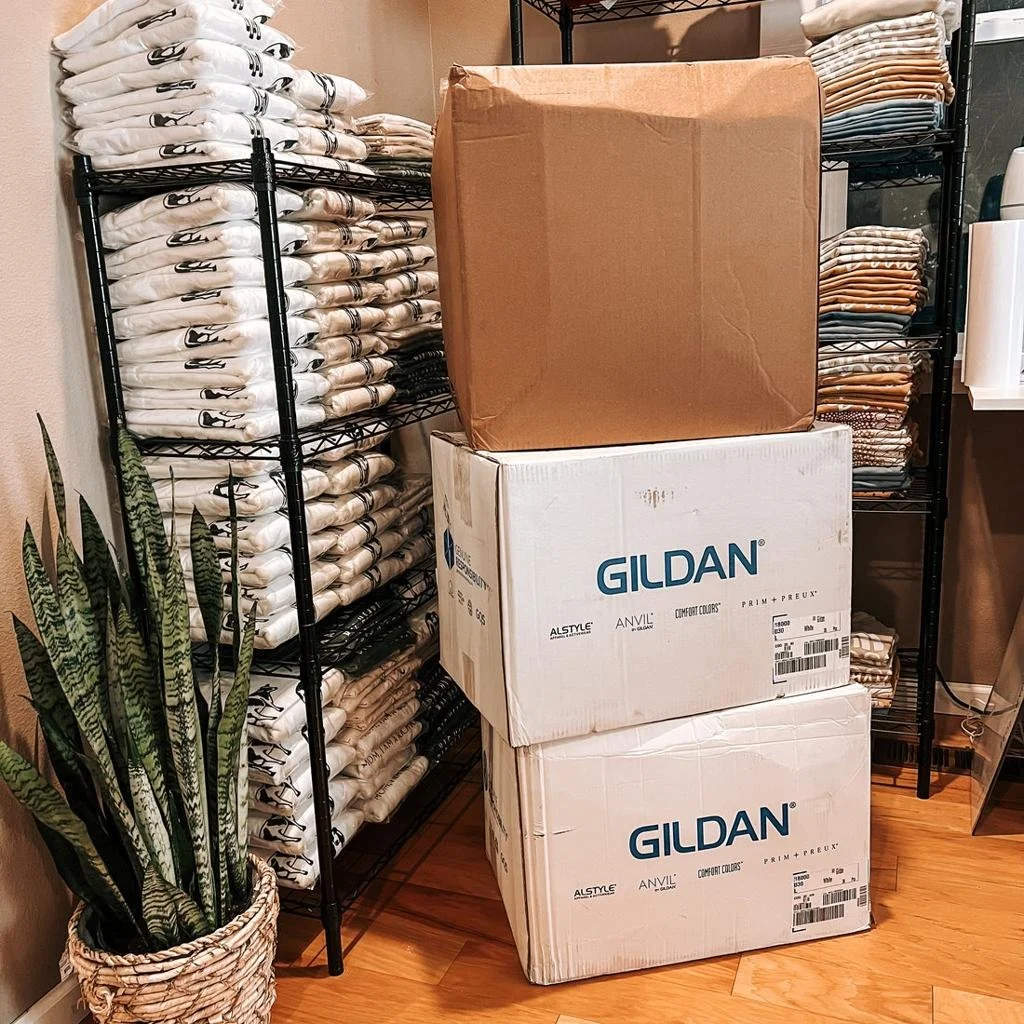
Ask yourself:
Which products do customers request most often?
Which sizes and colors move consistently?
How quickly are you using your inventory?
Are you regularly running out of certain items?
Are you purchasing supplies for confirmed orders or simply hoping they'll sell?
Your past sales can tell you much more than a guess about what you might sell.
Buy based on demand whenever possible.
Buying in Bulk Can Help Your Profit Margin
One of the biggest advantages of wholesale purchasing is a lower cost per item.
If you're paying less per blank, you have more room between your supply cost and your selling price.
That can give your business more flexibility to:
Protect your profit margin
Offer competitive pricing
Handle larger orders
Increase your potential profit per sale
But remember: a lower unit price doesn't automatically mean a better business decision.
If you spend $500 on inventory that sits on a shelf for six months, you haven't necessarily made a smart purchase just because you got a better price.
Don't Let a Wholesale Price Talk You Into Overbuying

This is one of the easiest mistakes for a growing business to make.
You see:
12 pieces: $X each
48 pieces: $X each
100 pieces: $X each
And naturally, the lower price looks attractive.
But ask yourself:
“Can my business realistically use this inventory?”
If you need 15 shirts, buying 48 simply to get a lower unit price may not make sense.
Your goal isn't to own the most inventory.
Your goal is to have the right inventory for your business.
Know Your Fast-Moving Inventory
As your business grows, you'll start noticing patterns.
Maybe black shirts are constantly being used.
Maybe you sell mostly XL and 2X.
Maybe your customers frequently request certain colors.
Maybe one particular blank brand consistently performs well for your customers.
Those patterns can help you make smarter wholesale purchases.
Instead of stocking everything, you can focus more of your money on the products you know you're likely to use.
Your inventory should reflect your business not somebody else's.
Consider Your Cash Flow
Inventory is an investment, but it also ties up cash.
That money can't be used for:

Marketing
Equipment
Packaging
Shipping
Business software
New products
Unexpected expenses
Before placing a bulk order, consider whether your business can comfortably afford it.
A good rule is:
Don't let inventory leave your business cash-poor.
Growth is exciting, but a healthy business needs enough cash available to keep operating.
When Buying in Bulk Makes More Sense
There isn't one magic sales number that tells every business when it's ready for wholesale purchasing.
However, buying larger quantities may make more sense when: You consistently sell the same products.
If you're repeatedly purchasing the same blank shirts, buying larger quantities may reduce your cost and save you time. You're regularly running out of inventory.
If you're constantly placing small orders because you're running out of your best-selling products, it's worth looking at whether a larger purchase makes sense. You have predictable orders.
If you have recurring customers or regular events that require similar products, you can plan your inventory with greater confidence. Your cash flow can support it.
Even if the numbers look good, make sure the purchase won't put unnecessary pressure on the rest of your business.
Wholesale Doesn't Have to Mean “Buy Everything.”

One of the biggest misconceptions about wholesale purchasing is that you have to completely stock your business. You don't.
You can start with the products you use most frequently and expand your inventory as your business grows.
Think about your purchasing in stages:
Dreamer
You're testing the waters and figuring out what your customers might want.
Focus on learning, starting small, and avoiding unnecessary inventory.
Builder
You're getting consistent orders and beginning to recognize what sells.
Start purchasing more strategically around your most frequently used products.
Growth
Your demand is becoming more predictable.
Larger purchases and deeper inventory may make sense when they're supported by your sales and cash flow.
The goal isn't simply to buy wholesale.
The goal is to buy intelligently
Before Your Next Inventory Purchase
Ask yourself these five questions:
What am I consistently selling?
How quickly am I using this inventory?
Will buying more actually reduce my costs enough to matter?
Can my business comfortably afford the purchase?
Do I have a plan for using the inventory?
If you can answer those questions confidently, you're in a much better position to make your next purchasing decision.
Build Your Inventory With Confidence
Your inventory should support your business not overwhelm it.
Whether you're purchasing your first few blanks or preparing to place larger wholesale orders, the goal is the same:
Have what you need, protect your cash flow, and make purchasing decisions based on your actual business.
At JackBai Wholesale Supply, we're building our supply and education resources to support entrepreneurs at different stages of their apparel-business journey.